

Auto Loans Made Easy: Your Path to Car Ownership
The road to car ownership starts long before you turn the key. From understanding loan options to finalizing financing, we’re here to make sure you feel confident, informed, and completely at ease throughout the process.
In this guide, you’ll learn what an auto loan is, how auto loan rates work, and how to find the right car financing option for your budget and lifestyle. You’ll gain a clear picture of what you can afford, how to qualify for a competitive interest rate, and what to expect at each stage of the car-buying process.
Let’s explore the tools, tips, and information you need to confidently take the first steps toward owning your dream car.
Table of Contents
I. Auto Loan Basics: Understanding How Auto Financing Works
For many people, an auto loan is the easiest way to buy a car. In fact, according to the Consumer Financial Protection Bureau, nearly 86 million Americans have auto loans, making them the second most common type of consumer debt after mortgages. Because car loans are such a big part of the car‑buying process, it’s worth taking a little time to understand how they work before you start shopping.
When you begin looking at auto loans, it helps to get comfortable with a few key terms that can shape your borrowing experience. Things like the loan amount, interest rate, and length of term all affect your monthly payment and the total cost of your loan. It’s also helpful to know the difference between secured and unsecured loans, and how your credit score can influence your approval odds and the rate you’re offered. Having a handle on these basics puts you in a stronger position to compare offers and ask for terms that fit your budget.
As you move through this guide, you’ll see different options, including traditional auto loans, leasing, and refinancing opportunities. Each comes with its own pros and cons, so it’s worth thinking about your budget, lifestyle, and future plans. With a solid understanding of everything you need to know, you’ll be better prepared to choose the auto financing option that works best for you and your future.
What is an Auto Loan?
An auto loan is a type of financing that helps you buy a car by spreading the cost out over time. Instead of paying the full price upfront, you borrow money from a lender—such as a bank, credit union, or other financial institution—and repay it in monthly installments that include both principal and interest. The amount you can borrow typically depends on the vehicle’s price, your credit score, and the length of the loan term, which is often anywhere from 36 to 84 months (about three to seven years). In short, the loan lets you get the car you need now and pay for it over time.
Most auto loans are secured loans, which means the car itself is used as collateral. If the borrower stops making payments, the lender has the right to repossess the vehicle to recover what’s owed. Making your payments on time can help build or improve your credit history, showing future lenders that you’re responsible with debt. You can get this loan for both new and used vehicles, and having access to this type of financing can make it much easier to manage a major purchase that’s often essential for commuting, running errands, and everyday life.
Key Terms to Know
Understanding the essential terminology related to auto loans is crucial for making informed financial decisions. Being familiar with these key terms can help you navigate the ins and outs of auto financing and ensure you secure the best possible deal. Let's get started on important terms:
- Loan Term: The duration over which the loan must be repaid, typically ranging from 36 to 84 months.
- Interest Rate: The percentage charged on the loan amount, which can be fixed or variable.
- Principal: The original sum of money borrowed, excluding interest.
- Monthly Payment: The amount paid each month to repay the loan, including principal and interest.
- APR (Annual Percentage Rate): The total cost of borrowing expressed as a yearly interest rate, including fees and other costs.
- Secured Loan: A loan backed by collateral, such as the vehicle itself, which can be repossessed if payment are not made. An unsecured loan would be a loan that isn't backed by any collateral whatsoever.
- Credit Score: A numerical representation of your creditworthiness, influencing the interest rate and terms you may receive.
- LTV (Loan-to-Value) Ratio: A ratio that compares the loan amount to the value of the vehicle, impacting loan approval and terms.
- Down Payments: A down payment is the amount you pay upfront when you buy a car, and it directly reduces how much you need to borrow. It’s usually a percentage of the vehicle’s purchase price and shows lenders you’re committed, which can help you qualify for better auto loan terms. In general, a larger down payment can lead to a lower interest rate, smaller monthly payments, and a more affordable loan overall.
- Loan Terms: The loan term is the amount of time you have to repay your auto loan. Most terms range from 36 to 84 months (about three to seven years). Shorter terms usually mean higher monthly payments but less interest paid over the life of the loan. Longer terms can lower your monthly payment, but you’ll often pay more in interest overall. The right loan term is the one that fits comfortably into your monthly budget while keeping your total costs reasonable.
- Interest Rate: The interest rate on an auto loan is the cost of borrowing money to finance your vehicle, shown as a percentage of the loan amount (often called APR). Your rate affects both your monthly payment and the total cost of the car over time. Lenders typically look at your credit score, income, loan term, down payment, and overall market conditions when setting your rate. Improving your credit, making a larger down payment, and exploring your financing options can help you qualify for a lower rate and save money over the life of your loan.
Use one of our auto loan calculators to estimate your potential monthly payment and plan with confidence!
Beyond these variables, there are three key decisions to make when you’re ready to purchase a vehicle.
Direct vs. Indirect Auto Loans; What's the Difference?
When considering auto loans, it is essential to understand the distinction between direct and indirect lending. Direct lending occurs when a borrower secures a loan directly from a financial institution, such as a bank or credit union. In this scenario, the lender evaluates the borrower's creditworthiness and financial situation to determine the loan terms, including interest rates and repayment schedules. This method often allows for more straightforward communication and potentially better rates, as the borrower deals directly with the lender without intermediaries. Additionally, direct lending can provide a clearer understanding of the loan process, as borrowers can ask questions and receive immediate feedback from the financial institution.
On the other hand, indirect lending involves a third party, typically a car dealership, acting as an intermediary between the borrower and the lender. In this arrangement, the dealership facilitates the loan process by connecting the borrower with various lenders, which can sometimes lead to a broader range of financing options. While indirect lending can be convenient for borrowers who prefer a one-stop shopping experience, it is important to have a clear understanding of your agreement and expectations with the dealership you are working with. Understanding these differences can help borrowers make informed decisions when financing their vehicle purchases.
Should You Finance a New or Used Car?
When considering auto loans, one of the key distinctions is between financing a new vehicle and a used one. New cars typically come with higher price tags, which can lead to larger loan amounts and potentially higher monthly payments. However, they often come with manufacturer warranties, the latest technology, and improved fuel efficiency, making them appealing to buyers. Additionally, new car loans may offer lower interest rates due to the vehicle's higher value and the lender's perception of lower risk. On the downside, new cars depreciate quickly, losing a significant portion of their value as soon as they are driven off the lot.
In contrast, used cars are generally more budget-friendly, as they are typically less expensive than new ones. This can result in smaller loan amounts and lower monthly payments, making them an attractive choice for many buyers. However, used vehicles may carry higher interest rates because lenders often view them as riskier due to their age and potential for hidden issues. Buyers of used cars should also consider the vehicle's history, including previous ownership and maintenance records, to ensure they are making a sound investment. Ultimately, the choice between new and used auto loans depends on individual financial situations, preferences, and long-term goals.
What is the Difference Between Leasing and Buying a Car?
When considering leasing versus buying a vehicle, it's essential to understand the key differences that can significantly affect your financial situation and driving experience. Leasing a vehicle typically offers a lower monthly payment compared to purchasing, making it an attractive option for those who prefer to drive a new car every few years without the long-term commitment. When you lease, you essentially rent the vehicle for a specified period, usually two to three years, after which you return it to the dealership. This arrangement often includes warranty coverage and maintenance, which can alleviate some of the costs associated with ownership. However, leasing comes with mileage restrictions and potential fees for excessive wear and tear, which can be a drawback for those who drive extensively.
On the other hand, buying a vehicle means you own it outright once the purchase is complete, giving you full ownership in how you use and maintain it. While the initial costs are typically higher, including a larger down payment and monthly payments, the long-term benefits can outweigh these upfront expenses. Once the vehicle is paid off, you can enjoy years of payment-free driving, and you have the freedom to customize or modify the car as you see fit. Additionally, there are no mileage limits, which is ideal for frequent travelers or those with long commutes. However, the real decision between leasing and buying comes down to how you want to drive, how long you plan to keep your vehicle, and what feels smartest for your budget.
Explore our easy-to-follow eBook, "Buying and Keeping a Car", and take the first step toward hitting the open road!
II. Navigating Auto Financing
When you understand how auto loans and auto financing work, you’re in a much better spot to start shopping for the right vehicle—without second-guessing every decision. A little knowledge can go a long way, and even a small change in auto loan rates can add up to big savings (or extra costs) over the life of your loan, so knowing how those rates are determined really matters.
Everyone’s car-buying process looks a little different, but there are some key steps that can help keep you on the right track. So, where do you start?
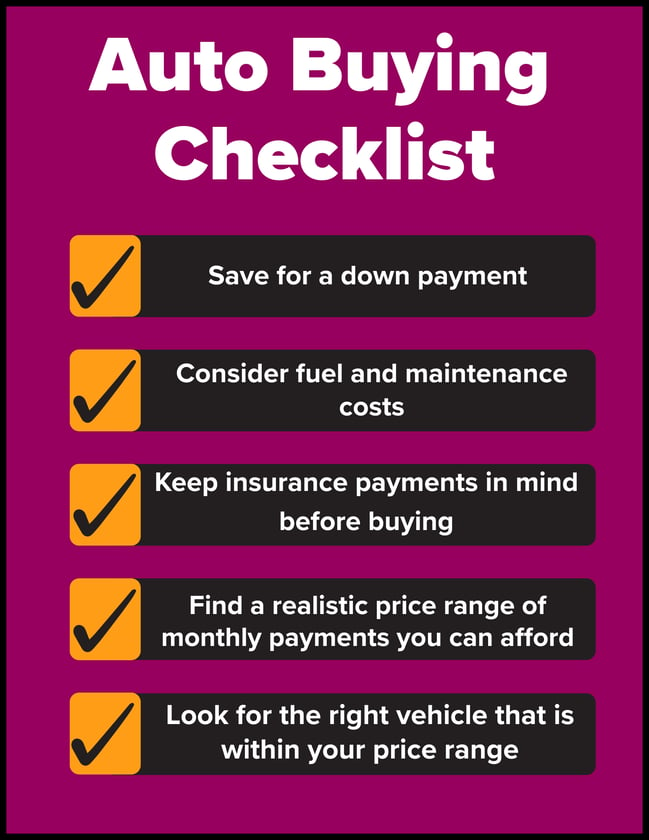
Begin by taking an honest look at your current finances and setting a realistic budget for your auto loan. Make sure you factor in the full cost of car ownership—not just the payment. That includes insurance, routine maintenance, repairs, and fuel. These expenses can add up quickly, and building them into your overall auto financing plan will help you choose a vehicle and loan that truly fit your life.
Assessing Your Financial Situation
To make a smart decision about your auto loan, it helps to start with a clear picture of your overall finances. Take a close look at your income, monthly expenses, savings, and any existing debt. Once you understand your finances, you can set a realistic car-buying budget and choose auto financing that comfortably fits your life—not the other way around.
Taking a close look at your money situation before you start car shopping is one of the smartest moves you can make. It gives you time to fix any problem areas before you sign on to an auto loan. Lenders will review your credit score, debt-to-income ratio, and overall financial health to decide if you qualify for an auto loan and what auto loan rates you’ll receive. When you work on these factors ahead of time, you’re more likely to qualify for better auto loan rates and save a lot over the life of your loan.
It’s also important to understand the real costs that come with auto loans and to know what cash you’ll have in reserve after you buy your car. Having extra funds set aside for surprises—such as repairs, medical bills, or other emergencies—helps keep your auto financing and monthly budget on track.
Buying a vehicle is a big commitment, but when you’re financially ready, you can enjoy your new ride without stressing over your auto loan payment. With a solid plan in place, you can focus on finding the right car, locking in a competitive auto loan, and making that car truly feel like yours.
Credit Score
Your credit score plays a big role in whether you’re approved for an auto loan and what kind of rates you’ll qualify for. Think of it as a snapshot of how you’ve handled credit over time. A higher credit score tells lenders you’re a lower-risk borrower, which can lead to better auto loan offers, lower interest rates, and more affordable monthly payments over the life of your car loan.
Several key factors affect your credit score for car loans: your payment history, credit utilization, depth of credit, recent inquiries, credit balances, and available credit. Late payments, high credit card balances, and too many recent credit inquiries can all drag your score down. And if you open new credit while you’re in the middle of the car-buying process, it can lower your score and increase your debt—making auto loan approval harder and potentially raising your interest rate. On the other hand, consistently paying bills on time, keeping balances low, and building a long, positive credit history can help boost your score.
If you’re looking to improve your credit score before applying for an auto loan, start by reviewing your credit report for errors and disputing anything that doesn’t look right. Make on-time payments a non‑negotiable—automatic payments can be a big help here. Try to avoid opening new credit accounts unless you truly need them, and keep older accounts open to lengthen your credit history. These steps can strengthen your credit profile, improve your chances of getting approved for an auto loan, and help you qualify for more competitive auto loan rates.
Debt-to-Income Ratio
Your debt-to-income (DTI) ratio might sound a little intimidating, but it’s really just a way for lenders to see how much of your income is already going toward debt. It compares what you pay each month on credit cards and loans to your pre-tax income. When your DTI is lower, it signals to lenders that you have room in your budget for an additional payment, which can make it easier to qualify for an auto loan.
Most lenders prefer a DTI of 45% or lower, but some may consider higher ratios depending on your overall financial situation. To figure out your own DTI, add up all your monthly debt payments (credit cards, personal loans, student loans) and divide that total by your gross monthly income. This gives you a good idea of how your auto loan application might look from a lender’s point of view.
If you want to improve your chances of getting approved and securing better auto loan rates, focus on paying down high‑interest debt, consolidating loans to lower your monthly payments, and avoiding new debt before you apply. Steps like these can improve your DTI, strengthen your auto loan application, and help keep your finances in a healthier place overall.
Making a Purchase
If you’ve wrapped up your financial checkup and you’re ready to step into the world of buying a new car, it’s normal to feel both excited and a little nervous—especially if you’re a first-time car buyer. To help you feel confident throughout the car-buying process, here are a few key steps to keep in mind as you move toward your new ride.
- Saving for a Down Payment: Start by researching typical down payment requirements for the type of auto loan you’re considering. Then, set up a dedicated savings account so your car funds stay separate and easy to track. Building a simple budget that automatically deposits a portion of your income into that account can help you consistently save toward your car-buying goal.
- Getting an Auto Pre-Approval: Auto loan pre-approval is a powerful tool in the car-buying process. Gather your key financial documents—such as recent pay stubs, tax returns, and proof of employment—to streamline the pre-approval process. Many dealerships prefer that you’re pre-approved before you start test-driving vehicles, so you know exactly what price range and monthly payment fit your budget. The Education First FCU Auto Loan team can help you get pre-approved quickly, so you can shop with confidence and focus on finding the right car.
- Looking for a Car: Once your auto financing plan is in place, it’s time for the fun part: car shopping. Start by outlining your must-haves versus nice-to-haves—things like fuel efficiency, safety features, technology, and space. Matching your wish list to your budget will help you narrow down options and avoid buying a car that doesn’t fit your comfort level with monthly payments. Partner with a dealer who understands your needs, browse listings that match your price range, and schedule test drives to see how each vehicle feels on the road. Online resources such as Cars.com, Autotrader.com, and AutoSmart can also be helpful when comparing cars and prices.
- Making an Offer: When you’ve found the vehicle you want, it’s time to make an offer and finalize your auto loan. With guidance from a loan officer, determine a loan amount and term that fit your budget and align with the vehicle’s value. Submit your auto loan application through your lender and be prepared to review different term and rate options. Once you’ve agreed on the terms, you’ll sign the loan agreement and move forward with the purchase.
- Understanding CarFax and Other Research: Before you commit, if you are buying a used vehicle, take time to research the vehicle’s history and condition. Here at Education First, we offer a free CarFax report to help you check for past accidents, title issues, or major repairs. It’s also a good idea to have a trusted mechanic inspect the car for any hidden issues that could lead to costly repairs later. A professional appraisal or valuation can help confirm that the price you’re paying matches the car’s true market value.
- Closing Process: The final step in your auto loan journey is the closing process. During the closing process, you’ll review and sign the auto loan documents, which outline your interest rate, monthly payment, repayment schedule, and any fees. You may also need to provide proof of insurance and confirm the vehicle’s details for the lender. Once everything is approved and signed, the lender disburses the funds to the seller, and you officially take ownership of your new car. Understanding each part of the auto loan closing process can help you feel prepared, avoid surprises, and drive off knowing you made a confident, informed decision.
Each car buyer’s journey looks a little different. Some people find the right vehicle early in their car-buying process, while others spend several weeks—or even months—searching for a car that fits their needs, budget, and comfort level with auto loan payments. Taking the time to compare vehicles, prices, and auto financing options can help you feel confident that you’re choosing the best car and auto loan for your situation.
Exploring Auto Refinancing
As you progress through your journey as a car owner, you may discover that your auto loan needs have changed. Refinancing your auto loan is a financial strategy that involves replacing your current loan with a new one, typically to secure a better interest rate or loan term. Here are some notable situations where car owners might find refinancing beneficial:
- Lower Interest Rates: If current market rates are lower than your original auto loan rate, refinancing can reduce your monthly payments and total interest paid over time.
- Shorter Loan Term: Refinancing to a shorter term can allow you to pay off your vehicle sooner and save on interest costs.
- Switch Loan Type: Moving from a variable-rate loan to a fixed-rate loan can provide more consistency in your monthly payments.
- Improved Financial Situation: If your credit score has improved, refinancing could help you secure more favorable loan terms and lower interest rates.
.png?width=649&name=Should%20you%20look%20to%20refinance%20(1).png)
Refinancing your auto loan can be a smart way to manage your finances, especially if you’ve built up equity in your vehicle or your credit has improved. By replacing your existing loan with a new one—often at a lower interest rate—you may be able to reduce your monthly payment or save money on interest over time.
It’s important, however, to pay attention to the costs associated with refinancing. Fees such as closing costs, potential prepayment penalties, and any required appraisal charges can add up, so you’ll want to weigh these against the interest and payment savings you might gain. Extending your loan term could lower your monthly payment but increase the total interest you pay.
Before you proceed with refinancing your auto loan, review your overall financial situation and long-term goals. Reviewing your budget, credit, and priorities will help you determine whether auto loan refinancing supports your financial health and is the right move for you.
Explore our auto loan options, competitive rates, flexible terms, and expert guidance for auto buyers in Southeast Texas!
III. Starting The Auto Loan Application Process
When you’re ready to start the auto loan application process, it helps to have your finances and paperwork in good shape. Begin by getting organized: gather proof of income, recent tax returns, bank statements, and a valid ID. Next, think about how much you can realistically borrow with an auto loan instead of just focusing on the maximum you might be approved for.
Look at your current bills and decide how a car payment will fit into your monthly budget. An online auto loan calculator is a great tool for this. You can test different loan amounts, auto loan rates, and terms to see how they change your monthly payment and total cost. This kind of planning helps you find an auto loan payment that feels manageable and keeps your budget from getting too tight.
Once your documents are ready and you’ve found a price range and monthly payment that work for you, you’re in a solid position to move forward and start your auto loan application with confidence.
Get Pre-Approved with Confidence
Getting pre-approved for an auto loan not only helps you understand what you can afford but also demonstrates to the seller that you're serious about your purchase. There are various pre-approval options available (if you're not familiar with them) when it comes to auto lenders, but working with a credit union auto lender has its unique benefits. One significant advantage of local lending is that credit unions or community banks usually offer benefits such as lower rates, personalized service, and a faster pre-approval process. Either way, a pre-approval gives you a clearer picture of your budget before you start shopping, so you can focus on vehicles that truly fit your price range. With a solid pre-approval in place, you’ll be ready to move quickly and confidently when you find the right car.
.png?width=649&name=Auto%20Pillar%20Page%203%20(1).png)
To get pre-approved for an auto loan, you’ll need to submit a credit application and share some basic financial information with a lender, including your income, assets, and credit history. You’re lending will also pull your credit report at this stage. The lender then uses this information to assess your creditworthiness and estimate your auto loan amount and interest rate. If you qualify, you’ll receive an auto loan pre-approval letter that shows how much you can borrow, something that can strengthen your position when negotiating with car dealers and sellers.
Pre-approval doesn’t guarantee final vehicle approval, but it does give you a clear idea of your borrowing power and helps you focus your car search on vehicles that fit your budget. It can also speed up the final auto financing process once you’ve picked out a car.
After you’re pre-approved, it’s important to keep your finances steady. Avoid taking on new debt or making large purchases that could change your credit score or debt-to-income ratio, as this might affect your final auto loan terms. Are you curious about the perks of pre-approving with Education First FCU? Lower rates, 90 days no pay, and a local lending team ready to help you in your car-buying journey!
Begin the Car Shopping Process
Once you have been pre-approved for an auto loan, it's time to start shopping for your new vehicle! With a clear understanding of your budget and an official pre-approval in hand, you can begin exploring options with a trusted dealer.
When deciding which car to purchase, consider questions such as "What type of vehicle do I need?" "Is fuel efficiency important to me?" "Do I prefer a new model or a certified pre-owned car?" Be sure to also check with your lender to see if they have any age/mileage restrictions. Your dealer will be an invaluable resource during this journey, guiding you through your inquiries and helping you find the best cars to test drive.
In addition to your dealer, there are other helpful resources to consider when evaluating the best vehicles for your needs. Websites like Edmunds and Kelley Blue Book provide essential information, including vehicle reviews, pricing, and reliability ratings. Additionally, if you have a friend or family member who's a car guru, you can always ask their opinion too!
Finalizing the Details
After you’re preapproved for an auto loan, you can begin shopping for a vehicle and selecting a dealership. Your preapproval will provide an estimated borrowing range and interest rate, which can help guide your budget.
Once you choose a car, the dealership will provide you or your lender a purchase agreement. At that point, your lender issues final loan terms for you to review and sign. Before closing, carefully read all the documents, including the loan agreement and disclosure forms. Ask questions if anything is unclear; your lender or financial representative can explain the terms and payment structure.
After you complete the paperwork, provide any required down payment, and the lender funds the loan, you can take delivery of the vehicle. Registration and title transfer are then processed, and you become the official owner of the car. Congratulations! Cue the happy dance, grab the keys, and enjoy that new-car smell. You earned it!
Check out our guide for first-time buyers navigating their auto loan options!