Skip to content

What is a Credit Score? A Complete Guide

Everything You Need to Start Your Credit Journey

a-cheerful-young-african-american-woman-is-settlin-2026-01-09-06-41-08-utc

What is a Credit Score? Here's your Complete Guide:

Your credit score plays a big role in some of life’s biggest financial moments, from getting approved for a car loan to securing a great rate on your dream home. But understanding how credit works isn’t always straightforward. That’s why we’re here to break down the basics, explain key credit concepts, and give you the knowledge you need to make confident financial decisions. 

Let’s take a look at how credit works, from how your credit score is calculated to the everyday decisions that can help improve it. You’ll also learn what score ranges lenders look for, how better credit can help you qualify for lower rates, and steps you can take to reach your financial goals. 

These are the strategies, resources, and insights you need when starting your credit journey!

What is a credit score?

A credit score is a number that reflects your creditworthiness, meaning how likely you are to repay borrowed money.  It’s calculated based on several factors, including your payment history, the length of your credit history, the amounts you owe, and the types of credit you use. Lenders use your credit score to decide whether you qualify for a loan and to determine your interest rate.  Your credit score,  whether measured by FICO or VantageScore,  is typically first calculated within one to six months after you open your first credit account, such as a credit card, auto loan, or student loan. From there, it follows you throughout your financial life and can influence many important decisions along the way. 

Understanding your credit score is essential because it can significantly impact your financial opportunities, such as securing loans, obtaining favorable interest rates, and even renting an apartment. Knowing your credit score allows you to take proactive steps to improve it if necessary. A higher score can lead to better financial deals, while a lower score may result in higher costs or denied applications. By staying informed about your credit score, you can make smarter financial decisions and work towards achieving your financial goals. 


Why Do You Need a Good Credit Score?

A strong credit score is essential for financial health, as it opens doors to better loan terms, lower interest rates, and increased borrowing power. Lenders view a high credit score as a sign of reliability, making it easier to secure mortgages, car loans, and credit cards. This can lead to significant savings over time, allowing you to invest in opportunities that can enhance your financial future.

Conversely, a poor credit score can have detrimental effects on your finances. It often results in higher interest rates, which means you’ll pay more over the life of a loan. Additionally, a low score can limit your access to credit altogether, making it challenging to make significant purchases or handle emergencies. This can create a cycle of financial strain, as you may find yourself relying on high-interest options or unable to secure necessary funds.

Maintaining a good credit score is not just about borrowing; it also impacts other areas of your life, such as insurance premiums and rental applications. Many landlords and insurers check credit scores as part of their decision-making process, meaning a low score could hinder your ability to secure housing or affordable insurance. Therefore, prioritizing your credit health is crucial for achieving long-term financial stability and peace of mind. 

Key Terms to Know

Understanding the key concepts that influence your credit score is essential for making confident financial decisions. When you recognize what these terms mean and how they affect your credit profile, you can better manage your accounts and work toward a stronger score over time. Below are some important terms to know as you review and monitor your credit score:

  • Credit score: A numerical representation of your creditworthiness.
  • FICO score: The most commonly used credit scoring model.
  • VantageScore: A VantageScore is a consumer credit scoring model developed jointly by the three major credit bureaus (Equifax, Experian, and TransUnion) to assess creditworthiness. 
  • Payment history: The record of your on-time and late payments.
  • Credit utilization: The ratio of your current credit card balances to your credit limits.
  • Length of credit history: The duration of your credit accounts, impacting your score.
  • New credit inquiries: Requests for your credit report that can temporarily lower your score.
  • Credit mix: The variety of credit accounts you have, such as loans and credit cards.
  • Derogatory marks: Negative entries like bankruptcies or collections that harm your score.
  • Score range: Typically between 300 and 850, with higher scores indicating better credit. 

What Affects Your Credit Score? Key Factors Explained 

Understanding the key factors that influence your credit score is essential for managing your financial health. Several elements come into play, including payment history, credit utilization, depth of credit, credit balances, and recent credit inquiries. Each of these factors contributes to how lenders assess your creditworthiness and can significantly impact your ability to secure loans or favorable interest rates. Here is each factor and what they mean. 

Payment History 

This plays a crucial role in determining your credit score, as it reflects your reliability in repaying debts. Lenders closely examine this aspect to assess the risk of lending to you; a strong payment history indicates that you are likely to meet your financial obligations on time. Conversely, missed or late payments can significantly lower your score, making it harder to secure loans or favorable interest rates in the future. Therefore, maintaining a positive payment history is essential for building and preserving a healthy credit profile. 

Depth of Credit

The depth of your credit history plays a crucial role in determining your credit score. A longer credit history demonstrates your experience with managing credit, which lenders view positively. It reflects your ability to handle debt responsibly over time, making you a more attractive candidate for loans and credit. It is also important to increase the depth of credit types on your credit reports. Having a mix of different credit accounts can help make your credit score more well-rounded.  Therefore, maintaining a strong depth of credit can be beneficial for building a healthier credit profile. 

Credit Utilization 

This is the ratio of your credit card balances to your credit limits. It plays a crucial role in determining your credit score, as lower utilization indicates responsible credit management. Keeping this ratio below 30% can positively impact your score, making it easier to secure loans and favorable interest rates in the future. 

Credit Balances 

Maintaining a healthy credit balance is crucial for a good credit score, as it reflects your ability to manage debt responsibly. By keeping your credit utilization low, ideally below 30% of your available credit, you demonstrate to lenders that you can handle credit wisely. This not only boosts your credit score but also enhances your chances of securing favorable loan terms and interest rates. Ultimately, effectively managing your credit balances helps foster financial stability and opens doors to better opportunities. 

Recent Credit Inquiries 

New credit inquiries can impact your credit score, as they indicate to lenders that you are seeking new credit. Each time you apply for a loan or credit card, a hard inquiry is recorded, which can slightly lower your score. On your VantageScore, all hard inquiries made in a 14-day period are considered recent for credit-scoring purposes. It's important to manage these inquiries carefully, as too many in a short period can signal financial distress, potentially making it harder to secure favorable credit terms in the future.

Available Credit 

Managing your available credit wisely is crucial for improving your credit score. Aim to use less than 30% of your total credit limit, as high utilization can negatively impact your score. Regularly monitoring your accounts and making timely payments also helps maintain a healthy credit profile, fostering financial stability.

How Credit Scores Are Calculated

Now that you understand some of the most common terms associated with credit scores, you can start to see how your financial habits impact your credit. Below is a breakdown of how your credit score is calculated and the key factors that influence it. 

Credit Score Pillar Page Pie Chart-2

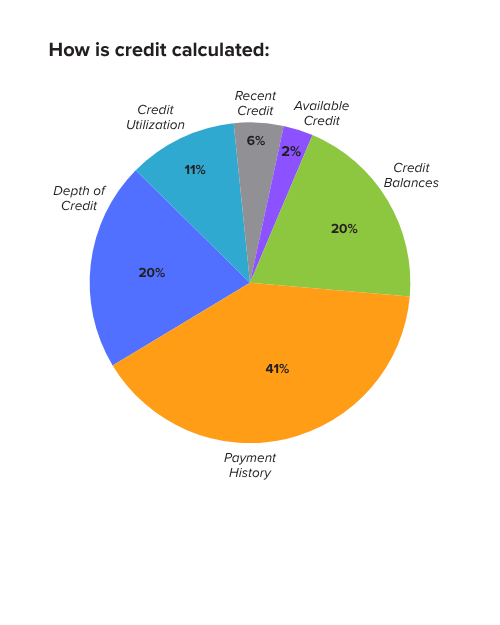
The calculation of a credit score involves several key factors, including payment history, credit utilization, depth of credit, credit balances,  recent credit inquiries, and available credit. Payment history is the most significant component, reflecting whether bills are paid on time. Credit utilization measures the ratio of current debt to available credit, while credit history length considers how long accounts have been active. A diverse credit mix can positively influence the score, and new credit inquiries indicate how often a consumer is seeking additional credit.

For lending decisions, we reference the current VantageScore 4.0 model, which evaluates credit scores based on the following factors: 

  1. Payment History: 41%

  2. Depth of Credit: 20%

  3. Credit Utilization: 20%

  4. Recent Credit Inquiries: 11%

  5. Credit Balances: 6%

  6. Available Credit: 2%

Together, these factors determine your overall credit score and provide a snapshot of how you manage credit over time. Lenders use this score as a quick way to assess your credit risk and decide on loan rates, credit limits, or approval. Understanding how your score is calculated and which factors have the greatest impact can help you make smarter financial decisions. Next, we’ll break down the different credit score ranges and what each one means for your borrowing power and financial health. 

Begin Your Credit Building Journey With Education First!

Schedule an appointment for financial guidance to see how we can help build your credit today!

VantageScore vs. FICO Score: What's the Difference?

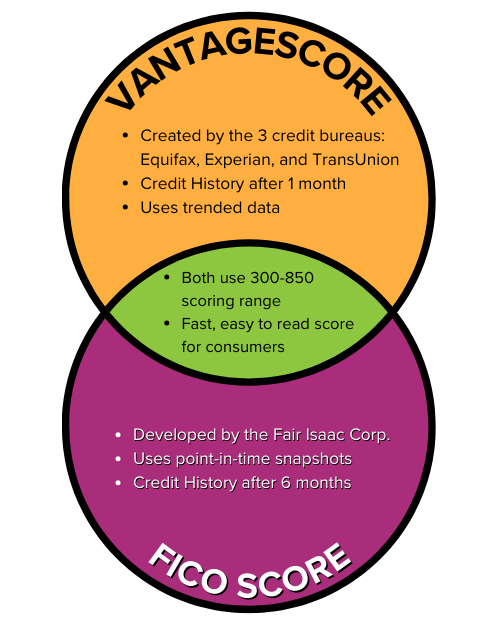
While understanding how credit scores are calculated is important, it’s also helpful to know that there isn’t just one scoring model used across the financial industry. Different lenders may rely on different systems when evaluating creditworthiness. Two of the most widely used models are the FICO Score and VantageScore. Although both models use information from your credit report to calculate a score, they can weigh certain factors differently and categorize score ranges in slightly different ways. At Education First, we reference the VantageScore model when evaluating loan rates and eligibility. Below is a breakdown of these two models, highlighting how they are similar and where they differ. 

Credit Score Pillar Page Venn Diagram

The FICO Score and VantageScore are two prominent credit scoring models used to evaluate an individual's creditworthiness, yet they differ in several key aspects. FICO, developed by the Fair Isaac Corporation, has been the industry standard for decades and relies on a specific formula that weighs payment history, credit utilization, length of credit history, types of credit, and recent credit inquiries. In contrast, VantageScore, created by the three major credit bureaus, which are  Equifax, Experian, and TransUnion, emphasizes a more flexible approach, allowing for a broader range of credit data, including alternative data sources. This can be particularly beneficial for individuals with limited credit histories.

Despite their differences, both scoring models share a common purpose: assessing credit risk and helping lenders make informed decisions. Both scores range from 300 to 850, with higher scores indicating better creditworthiness. Additionally, they consider similar factors, such as payment history and credit utilization, so responsible credit behavior can positively influence both scores. Understanding these similarities and differences can empower consumers to manage their credit more effectively and make informed financial choices. 
What do Credit Ranges Mean

Understanding credit ranges is essential for navigating the financial landscape, as they provide insight into an individual's creditworthiness. These ranges categorize credit scores into different levels, indicating how likely a person is to repay borrowed money. Typically, higher scores suggest better credit health, while lower scores may signal potential risks to lenders. Below, you will find a detailed breakdown of these credit ranges and their implications. 

Very Poor

Under the VantageScore model, a very poor credit score is generally defined as any score below 500. While this range may feel discouraging, it can also serve as a starting point for rebuilding and strengthening your credit profile. Many people begin improving their credit by establishing consistent, positive payment habits. One helpful tool for doing this is a share-secured loan, which allows you to borrow against your own savings while building a record of on-time payments. In addition, our team is here to support you throughout the process. Members can even schedule an appointment with one of our financial service representatives to review their credit and develop a personalized plan for improvement. 

Poor

Under the VantageScore model, a poor credit score generally falls between 500 and 600. While this range may limit some borrowing options, it also shows that progress is already underway compared to the lowest credit ranges. Continuing to build positive credit habits—such as making payments on time and keeping balances manageable—can help move your score upward. For some borrowers, tools like debt consolidation loans may also help simplify multiple payments into one and make managing debt more predictable. 

Fair

A fair credit score under the VantageScore model typically falls between 601 and 660. At this stage, many borrowers are actively strengthening their credit and beginning to qualify for a wider range of financial products. Maintaining consistent payment history and keeping credit utilization low can make a meaningful difference in moving your score into the next range. In some cases, opening or responsibly managing a credit card or small loan can help demonstrate reliable credit behavior over time. 

Good

A good credit score under the VantageScore model typically falls between 661 and 780. Borrowers in this range often qualify for more favorable loan terms and competitive interest rates. At this stage, the focus often shifts toward maintaining strong credit habits—such as making payments on time, keeping balances low, and monitoring your credit report for any changes or inaccuracies. Tools like credit monitoring services can help you stay informed and protect the progress you’ve made. 

Excellent

An excellent credit score under the VantageScore model ranges from 781 to 850. Reaching this level reflects a long history of responsible credit use and strong financial habits. Borrowers in this range typically qualify for the most competitive interest rates and the widest variety of financial products. Maintaining this level of credit often involves making on-time payments, keeping credit utilization low, and preserving long-standing credit accounts. 

See Where You Stand with SmartScore

Book your SmartScore appointment now and see exactly how to build your credit confidently.

How to Improve Your Credit Score

Improving your credit score is an essential step towards achieving financial stability and unlocking better borrowing options. A higher credit score can lead to lower interest rates on loans and credit cards, making it easier to manage your finances. 

Understanding the factors that influence your credit score is crucial for making informed decisions. From timely bill payments to managing your credit utilization, each aspect plays a significant role in shaping your score. By implementing the tips and techniques outlined here, you can take proactive steps to boost your credit score and pave the way for a brighter financial future. In this section, we will explore practical strategies that can help you enhance your creditworthiness and build a solid financial foundation. 

Share-Secured Loans and Credit Cards

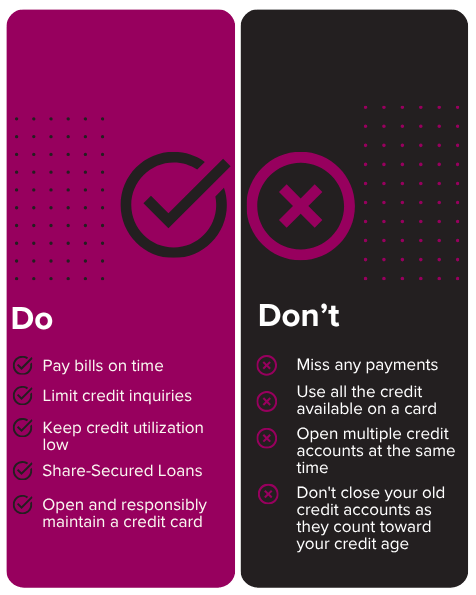
Improving your credit score can be effectively achieved through the use of share-secured or credit card loans. By securing a loan with your savings or assets, you not only reduce the risk for lenders but also demonstrate responsible borrowing behavior. Making timely payments on these loans can positively impact your credit history, leading to an increase in your credit score over time. Additionally, using a credit card responsibly by keeping your balance low and paying it off in full each month can further enhance your credit profile. This combination of secured loans and prudent credit card use creates a solid foundation for building a healthier credit score. 

Paying your Bills on Time

Paying your bills on time is a crucial step in enhancing your credit score. Consistently meeting payment deadlines demonstrates financial responsibility and reliability to creditors, which can positively influence your creditworthiness. By setting up reminders or automatic payments, you can ensure that you never miss a due date, thereby avoiding late fees and potential negative impacts on your credit report. Over time, this habit not only helps to build a solid credit history but also contributes to a higher credit score, opening doors to better loan terms and interest rates in the future. 

Dos and Donts Credit Score Pillar Page Graphic-1

Keeping Credit Utilization Low

To enhance your credit score, it's essential to maintain a low credit utilization ratio. This means using only a small portion of your available credit, ideally keeping it below 30%. By doing so, you demonstrate to lenders that you are responsible with your borrowing habits, which can positively impact your creditworthiness. Regularly monitoring your spending and making timely payments can help you stay within this limit, ultimately leading to a healthier credit profile over time. 

Avoid Opening Too Many Accounts

To enhance your credit score, it's essential to limit the number of new accounts you open. Each application can lead to a hard inquiry, which may temporarily lower your score. By being selective and only applying for credit when necessary, you can maintain a healthier credit profile and demonstrate responsible financial behavior, ultimately boosting your score over time. 


How to Check Your Credit Score for Free

Understanding your credit score is crucial for managing your financial health. It serves as a key indicator of your creditworthiness, influencing everything from loan approvals to interest rates. By regularly checking your credit score for free, you can stay informed about your financial standing and take proactive steps to improve it if necessary.

In this section, we will explore the importance of monitoring your credit score and how it can impact your financial decisions. Being aware of your score not only helps you make informed choices but also empowers you to take control of your financial future. Let's dive into why keeping an eye on your credit score matters. 

Free Credit Report

To check your credit, visit AnnualCreditReport.com, a reliable source for obtaining your credit reports from the three major credit bureaus. Simply fill out the online form with your personal information, and you can access your reports for free once a year. This process helps you monitor your credit health and identify any discrepancies or fraudulent activities. Remember to review your reports carefully and take note of any areas that may need attention. 

Credit Monitoring Tools

To effectively monitor your credit, you can utilize various credit monitoring tools, including popular options like CreditKarma and our credit program, SmartScore. These platforms provide you with access to your credit report and score, allowing you to track changes over time and understand the factors influencing your credit health. CreditKarma offers a user-friendly interface that not only displays your credit score but also provides personalized recommendations for improving it. Similarly, SmartScore is designed to give you insights tailored to your financial situation, helping you identify areas for improvement and potential risks. By regularly checking your credit through these tools, you can stay informed about your financial standing, detect any discrepancies or fraudulent activities early, and take proactive steps to enhance your creditworthiness.

Start your Credit Journey with Education First!

At the end of the day, your credit score is just a number—but it’s one that can make a big difference when it comes to things like loan rates, credit approvals, and overall financial flexibility. The good news? It’s not set in stone. By understanding how credit scores work and building strong habits over time—like making payments on time, keeping balances manageable, and checking in on your credit report—you can steadily move that number in the right direction.

No matter where you are in your credit journey, there are tools and resources that can help along the way. Maybe you’re just getting started and want to learn the basics of building credit. Maybe you’re looking for ways to improve your score or keep an eye on it with credit monitoring. Or maybe you’re exploring products designed to help strengthen your credit while still fitting comfortably into your budget. Wherever you’re starting, taking a few small steps today can make a big difference down the road.

And remember—you don’t have to figure it all out on your own. At Education First FCU, we’re always here to help you learn more about your credit, explore options that make sense for your situation, and build a financial game plan that works for you. With the right information, a few smart habits, and a little patience, you can build a credit score that helps open doors to the great opportunities ahead!

Start Building Your Credit Today!

Discover how a secured credit card can jumpstart your score and set you on the path to financial freedom.

IV. FAQs

Your credit score can update as often as monthly, depending on when lenders report new information to the credit bureaus.

Yes, but you may face higher interest rates or limited options; some lenders specialize in working with lower credit scores. 

No, checking your own credit score is considered a soft inquiry and does not affect your credit. You can use Education First FCU's credit checking tool SmartScore for free credit reports. 

 Yes, submitting a formal loan application typically triggers a hard credit inquiry, which may cause a small temporary dip in your score. 

Each credit bureau receives slightly different reporting from lenders, so Equifax, Experian, and TransUnion may not all show the same information at the same time. 

 Your score can still drop due to factors like increased balances, new accounts, reduced average account age, or changes in credit limits. 

If an error is removed after a dispute, your score may change once the corrected information is updated with the credit bureaus.